
Answer-First Summary
Quick answer
2026–2027 guide to Terracotta in elevation & interior design in India. Compare ₹/sq ft costs (cladding, jali, dry facade), pros vs cons, & 5 areas to avoid.
- Is terracotta suitable for exterior elevation in heavy rain regions like Bengaluru or Kerala in 2026-2027? Yes, provided it is either installed as a ventilated dry-cladding rain-screen system or treated with a deep-penetrating breathable silane/siloxane hydrophobic sealant. Without sealing, wet mortar-fixed terracotta absorbs 10% to 15% water, leading to white salt efflorescence and moss growth.
- What is the per sq ft cost of terracotta elevation and interior tiles in 2026–2027? In 2026–2027, standard terracotta cladding tiles cost ₹70 to ₹145 per sq ft, terracotta jali breeze blocks range from ₹48 to ₹195 per piece (approx. ₹190 to ₹480 per sq ft), and engineered ventilated dry-cladding systems (including aluminum substructure and labor) cost ₹580 to ₹980 per sq ft.
Terracotta Elevation & Interior Design: 2026–2027 Cost & Jali Studio
Interactively simulate ventilated rain-screen facades, terracotta jali breeze blocks, sun-cut baguettes, and cotto flooring with real-time 2026–2027 pricing per sq.ft.
Terracotta in Elevation & Interior Design: The 2026–2027 Mega Guide
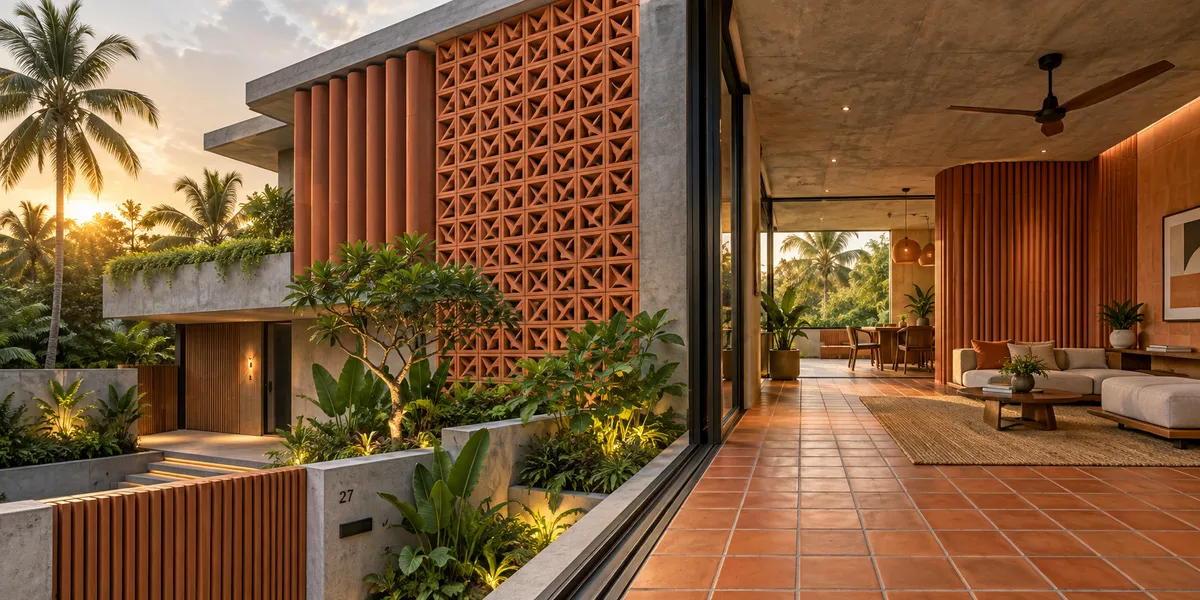
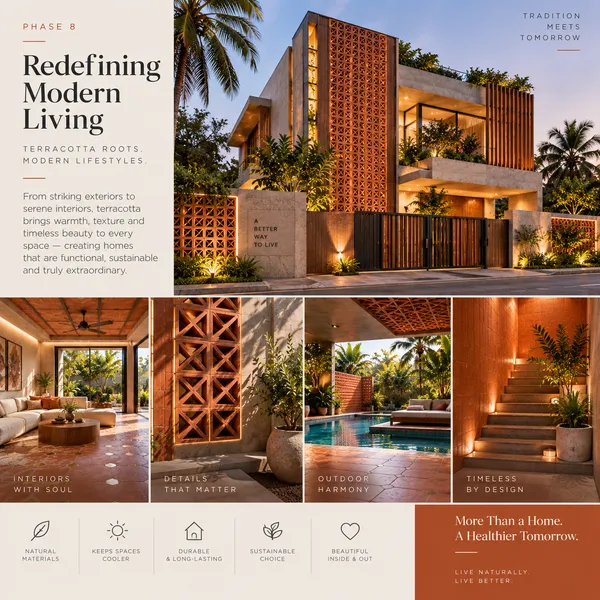
Few building materials possess the primal, poetic gravity of Terracotta. Meaning literally “baked earth” in Italian, this ancient material has bridged millennia—from the Indus Valley civilizations and Chettinad ancestral mansions to modern tropical luxury villas across Bengaluru, Hyderabad, and Kerala.
As we head towards 2027, architectural fatigue with clinical “white-box” minimalist glass, synthetic ACP (Aluminum Composite Panel) sheets, and imitation plastic louvers has reached an all-time high. Terracotta has staged a massive architectural comeback as the headline material for sustainable luxury and biophilic modernism.
THE 2026–2027 TERRACOTTA SPECTRUM
🏛️ EXTERIOR ELEVATIONS
- ▸ Ventilated Dry Cladding (Rain-screen system)
- ▸ Terracotta Jali Blocks (Passive breeze cooling)
- ▸ Sun-Cut Louvers & Baguettes (Solar shading)
- ▸ Interlocking Modern Roof Tiles (Storm proofing)
🛋️ INTERIOR SPACES
- ▸ Handmade Cotto Floors (Velvety underfoot cool)
- ▸ Fluted 3D Accent Walls (Acoustic luxury)
- ▸ Filler Slab Ceilings (Laurie Baker method)
- ▸ Architectural Jali Screens (Light filtration)
However, terracotta is not a material for the careless. Treat it like vitrified tile, and within two monsoons you will be greeted with chalky white efflorescence, greenish algae, and permanent oil blotches.
In this definitive 2026–2027 mega guide, our architectural and interior engineering team at Liza Homes breaks down exterior elevations, interior applications, design aesthetics, pros, cons, 2026–2027 itemized rate cards, and the 5 high-risk zones where you must avoid it at all costs.
📑 Mega Blog Navigation Index
Phase 1: Terracotta in Modern Exterior Elevations (2026–2027 Trends)
How architects use baked clay to turn ordinary facades into climate-responsive sculptures.
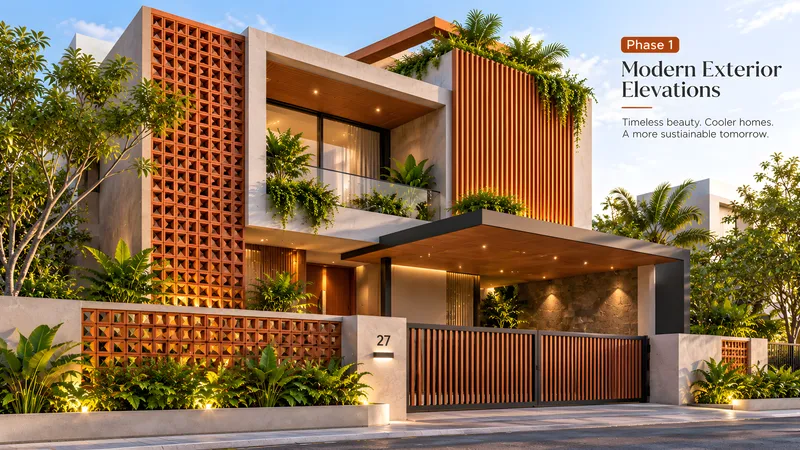
Modern exterior elevations are moving away from flat acrylic exterior paints toward tactile depth, passive thermal buffering, and kinetic shadow lines. Here are the 4 primary ways terracotta is deployed on elevations:
1. Terracotta Jali (Perforated Breeze Blocks)
The traditional Indian jali has been reimagined in geometric rectangular, triangular, and parametric 3D modules for 2026–2027 elevations.
- Microclimate Regulation: When hot dry air passes through the constricted apertures of hollow terracotta blocks, the air velocity increases and temperature drops via the Venturi Effect.
- Solar Decoupling: It cuts off direct southern and western solar glare by up to 60% while washing interiors with moving geometric sunbeams throughout the day.
- Privacy Screening: Ideal for balconies, stairwell shafts, and pooja-room double-height cutouts facing crowded urban roads in Bengaluru and Hyderabad.
2. Ventilated Rain-Screen Facades (Dry Cladding)
In 2026–2027 luxury homes and commercial villa projects, extruded terracotta panels (16mm to 30mm thickness) are mounted on hidden extruded aluminum sub-frames using stainless steel clips.
- The Air Cushion: A 40mm–60mm ventilated air gap between the terracotta panel and the structural concrete wall allows warm air to rise and escape through the top (chimney effect).
- Zero Mortar Cracking: Thermal expansion and structural vibrations are absorbed by the mechanical clips, eliminating the hollow-tile dislodging common with wet-cement plastering.
3. Terracotta Louvers & Baguettes
Long extruded clay tubes—square, elliptical, or blade profiles (typically 50x50mm up to 60x150mm)—strung on internal aluminum or steel structural rods.
- Used vertically to conceal duct shafts, air conditioning outdoor units, or to create dramatic second-skin privacy facades over glass curtain walls.
4. Contemporary Pitch Roof Tiles & Shingles
While traditional Mangalore tiles required wooden rafters and leaked under torrential squalls, modern high-compression interlocking terracotta roof tiles feature dual-water-grooves, anti-capillary ribs, and weather-proof glazed matte finishes that withstand 120 km/h wind-driven rains.
Phase 2: Terracotta in Interior Design
Bringing tactile organic warmth, grounding energy, and acoustic dampening indoors.
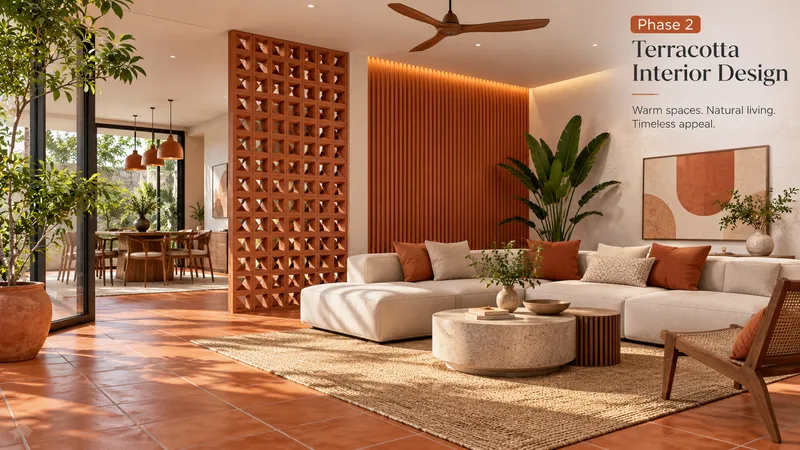
Inside the home, terracotta acts as an antidote to cold glossy surfaces, synthetic laminate sheets, and sterile LED lighting.
| Room / Zone | Recommended Terracotta Format | Sensory & Functional Benefit |
|---|---|---|
| Living Room | Fluted Terracotta 3D Wall Panels | Acoustic dampening & sculptural luxury |
| Dining / Verandah | Handmade Cotto Paver Flooring | Naturally cool underfoot & rustic patina |
| Ceilings | Hollow Terracotta Filler Slabs | 25% dead-load reduction & passive heat insulation |
| Foyer / Partitions | Interlocking Geometric Jali Dividers | Dynamic spatial semi-privacy & daylight play |
| Courtyard / Atrium | Terracotta Planters, Urns & Murals | Biophilic grounding & microclimate regulation |
1. Handmade Floor Pavers & Cotto Tiles
Unlike machine-pressed ceramic tiles that look mechanically identical, unglazed Cotto floor tiles feature subtle natural variations in tone—ranging from pale apricot and warm ochre to rich sienna red.
- Thermoregulation: In tropical heat, walking barefoot on natural terracotta tile feels naturally cool and velvety.
- Patterns: Dominating 2026–2027 moodboards in hexagonal, herringbone, chevron, and basketweave formats, frequently paired with a black Kadappa stone or brass inlay border.
2. Terracotta Filler Slab Ceilings
Popularized by legendary architect Laurie Baker, replacing unnecessary non-structural concrete on the tension side of a slab with lightweight curved terracotta ceiling pots or hollow roof tiles achieves two huge milestones:
- Reduces cement and steel consumption by 20% to 30%.
- Leaves an exposed, earthy vaulted brick-red ceiling that insulates top-floor bedrooms from blistering roof-slab radiation.
3. Fluted & 3D Accent Feature Walls
Textured terracotta tiles with fluted, corrugated, or stepped reliefs create dramatic focal backdrops for TV credenzas, double-height foyer walls, and dining room niches when washed with 2700K–3000K warm grazing uplights.
Phase 3: The Aesthetics & 2027 Material Chemistry
How top architects style terracotta without making the home look like an archaic village potter's shed.
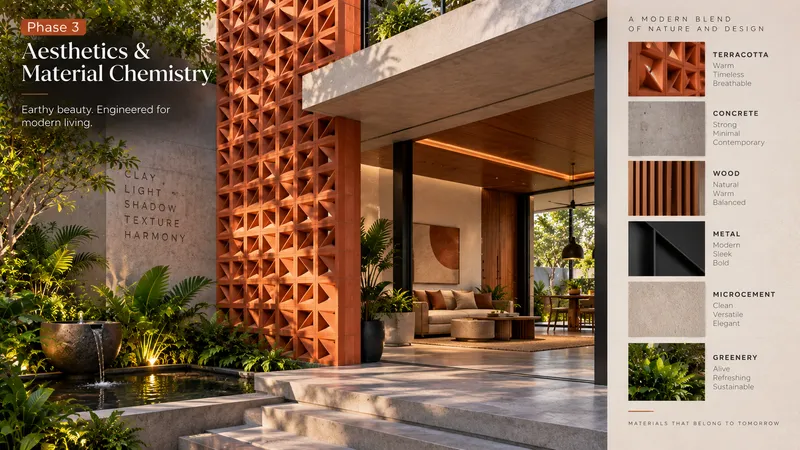
The key to mastering terracotta in contemporary architecture is high-contrast material dialogue. When terracotta is surrounded solely by wood and mud-tones, the space can feel dark, suffocating, and dated.
When balanced against clean architectural lines and modern structural textures, it produces timeless tropical luxury:
1. The "Brutalist Warmth" Formula
Raw Exposed Form-Finish Concrete + Terracotta Jali + Matte Black Powder-Coated Aluminum. The industrial cool grey concrete makes the warm orange-red clay pop with magnetic intensity.
2. The "Tropical Modern" Formula
Natural Teakwood / Oak + Terracotta Cladding + Lush Monsoonal Greenery (Monstera, Ficus, Palms) + Off-White Lime Plaster. Evokes the serene luxury of high-end Sri Lankan Geoffrey Bawa estates.
3. The "Japandi Earth" Formula
Smooth Beige Micro-cement + Terracotta Baguettes + Brushed Brass Accents + Minimalist Concealed Lighting. Strips away rustic roughness in favor of clean geometric Zen discipline.
💡 Architectural Fenestration Pairing: When pairing terracotta facades or jali screens with exterior windows, matte charcoal grey or golden oak uPVC frames create high-contrast luxury aesthetics. Test profiles directly against terracotta finishes and estimate rates using our live uPVC Window Price Calculator Bangalore 2026 (Cost Per Sq Ft & Design Studio).
The Color Psychology of Baked Clay
The spectrum of terracotta (iron oxide reacting with oxygen during kiln firing at 950°C–1150°C) triggers primal feelings of safety, grounding, connection to soil, and psychological warmth. In an age dominated by glowing blue smartphone screens, terracotta creates an immediate physical sanctuary.
Phase 4: The Honest Pros & Cons Matrix
Engineering facts vs marketing myths before you sign off on your BOQ.
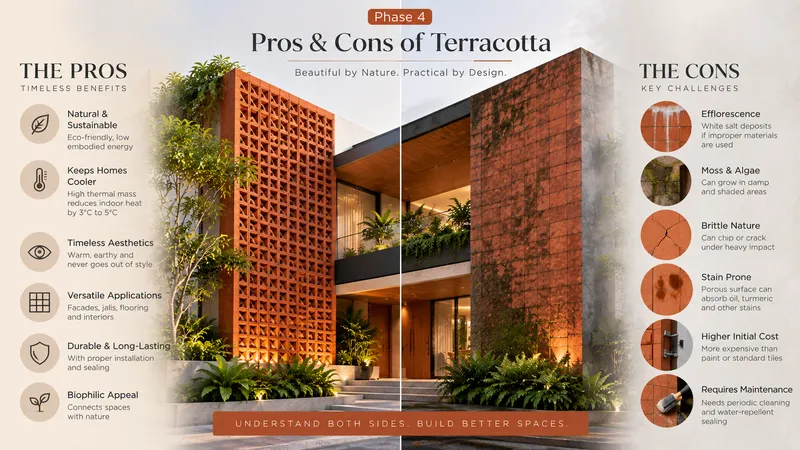
| Attribute | The Pros (Why Architects Love It) | The Cons (Why Contractors Complain) |
|---|---|---|
| Thermal Performance | Exceptional thermal mass. Absorbs sun heat slowly and dissipates it through micro-pores. | Takes longer to cool down at midnight if structural insulation behind panels is omitted. |
| Eco-Footprint | 100% natural clay, zero VOCs, non-toxic, fully recyclable and biodegradable. | Kiln firing consumes energy; locally sourced clay should be verified to prevent agricultural topsoil damage. |
| Durability | Fireproof (Class A1), UV-resistant (does not bleach or fade in harsh tropical sunlight). | High edge brittleness. Prone to chipping during shipping and aggressive site handling (requires 12–15% buffer). |
| Aging & Patina | Matures gracefully. Develops a weathered, character-rich patina that synthetic panels cannot mimic. | Unglazed surfaces are prone to moisture absorption (8% to 15%), attracting algae or dust streaks if unsealed. |
| Acoustics | Naturally porous hollow cavities dampen street noise and internal reverberation. | Heavy dead load compared to ACP, HPL, or aluminum siding; requires engineered framing. |
| Chemical Tolerance | Inert to ordinary environmental gases and UV rays. | Highly vulnerable to acidic substances (vinegar, lemon, wine, chemical tile cleaners) and hard-water lime stains. |
Phase 5: 2026–2027 Price Breakdown & Rate Card (India)
Material costs, framing hardware, wet mortar vs dry cladding, and labor rates with 2027 forecasts.
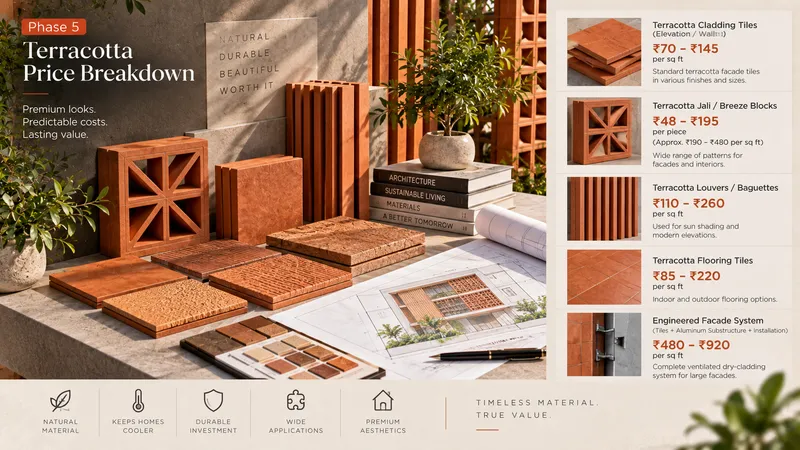
The biggest shock for homeowners is that terracotta installation and framing can cost more than the clay itself, particularly for modern dry-cladding facade systems.
Here is the realistic 2026–2027 cost benchmark for residential and commercial projects:
1. Material-Only Purchase Rates (Ex-Factory / Retail)
| Product Item | Typical Dimensions | Rate Unit | Indicative Price Range (2026–2027) |
|---|---|---|---|
| Standard Terracotta Cladding Tile | 9” x 3” x 15mm | Per Sq Ft | ₹70 – ₹130 |
| Fluted / 3D Textured Exterior Tile | 12” x 4” x 20mm | Per Sq Ft | ₹115 – ₹200 |
| Terracotta Jali Blocks (Geometric) | 8” x 8” x 3” | Per Piece | ₹48 – ₹105 (~₹190–₹420/sq ft) |
| Designer / CNC Clay Jali Blocks | 10” x 10” x 4” | Per Piece | ₹115 – ₹235 (~₹275–₹560/sq ft) |
| Terracotta Baguettes / Louvers | 50mm x 50mm x 1000mm | Per Running Ft | ₹230 – ₹510 |
| Handmade Interior Cotto Paver | 8” x 8” or Hexagon | Per Sq Ft | ₹90 – ₹180 |
| Interlocking Glazed Roof Tiles | 16” x 10” | Per Piece | ₹65 – ₹125 (~₹95–₹175/sq ft) |
2. All-Inclusive “Wall-Ready” Cost (Material + Installation + Hardware)
Don’t calculate your budget on tile costs alone. Here is the realistic turnkey cost per square foot for 2026–2027:
💰 Turnkey Per-Sq-Ft Realities (2026–2027):
- Wet-Cladded Wall Tiles (Polymer Mortar + Grout + Sealant): ₹170 – ₹275 / sq ft
- Structural Terracotta Jali Wall (TMT bar reinforcement + joints + sealer): ₹340 – ₹580 / sq ft
- Engineered Ventilated Dry Cladding (Aluminum substructure + SS clips + wind brackets): ₹580 – ₹980 / sq ft
- Interior Sealed Cotto Flooring (Leveling screed + adhesive + 2 coats penetrating PU seal): ₹220 – ₹360 / sq ft
Liza Homes Cost Warning: Always budget a 12% to 15% wastage allowance on terracotta jali and tiles. Unlike dense vitrified porcelain, clay tiles have micro-fissures from kiln firing, and corner chipping during road transit is notoriously common.
Phase 6: Fatal Mistakes & Where to AVOID Terracotta
The high-risk zones where baked clay will become your worst maintenance nightmare.
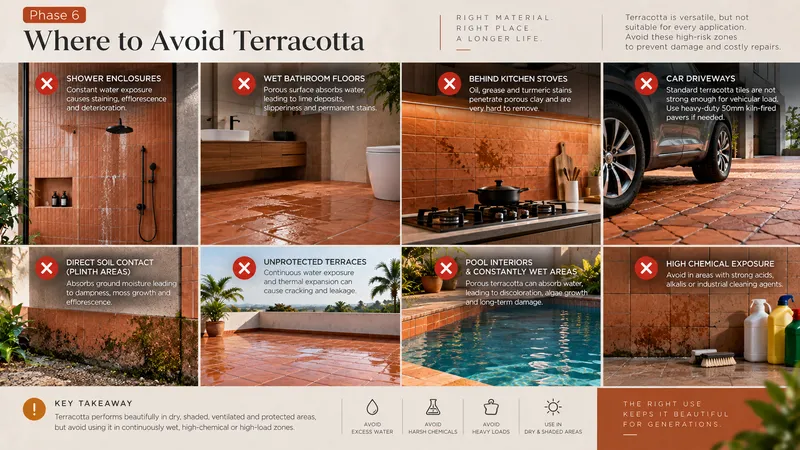
If anyone tells you terracotta can be used “anywhere,” they are either selling you excess tile stock or haven’t lived in a house with it for five years. Here are the 5 high-danger zones where terracotta must be avoided or protected with specialized engineering:
The 5 Critical Terracotta Danger Zones
1. Direct Shower Enclosures & Wet Bathroom Walls
- The Hazard: In Indian metro cities like Bengaluru, Chennai, and Hyderabad, tap and tanker water has high total dissolved solids (TDS > 500-1200 ppm) and calcium carbonates.
- What Happens: Porous unglazed terracotta absorbs hard water daily. Within 6 months, an indelible crust of white calcium scale and alkaline soap scum deposits deep inside the clay pores. Scrubbing with acid cleaners will pit, discolor, and dissolve the clay surface.
- Architect’s Alternative: Use rust/terracotta-colored matte glazed vitrified tiles or fluted ceramic tiles in the shower enclosure; reserve real terracotta for the dry vanity ceiling or powder-room partition.
2. Kitchen Cooktop Backsplash
- The Hazard: Daily Indian cooking involves sizzling oil, mustard splatters, tomato gravies, and turmeric steam.
- What Happens: Clay is chemically open-pored. Hot grease is instantly drawn into the capillaries via micro-suction. No amount of surface detergent can pull oil out once it penetrates 2mm beneath the skin, leaving dark, rancid, unremovable grease stains.
- Architect’s Alternative: Use large-format quartz, sintered stone, or glazed ceramic behind the hob. If you love the terracotta look, use kiln-glazed terracotta tiles finished with a vitrified glass glaze.
3. Light-Duty Paving on Car Driveways
- The Hazard: Installing standard 15mm–25mm floor tiles on vehicle driveways or parking ports.
- What Happens: SUVs weighing 1.8 to 2.5 tons exert intense point loads through the tire footprint. Clay has high compressive strength but poor flexural tensile strength. Any minor hollow under the tile bed will cause immediate diagonal snapping and pulverized edges.
- Architect’s Alternative: Only use 50mm–65mm thick high-density engineered vehicular clay paving bricks laid on a compacted quarry-dust and sand sub-base, never thin screed-fixed tiles.
4. Exterior Parapets & Walls Without Drip Flashing
- The Hazard: Installing exterior terracotta tiles flush up to the roof parapet without an overhanging coping stone or metal drip-edge.
- What Happens: Dirty terrace rainwater cascades down the face of the terracotta facade. Dust, bird droppings, and dissolved salts enter the pores. When the sun bakes the wall, water evaporates, leaving behind crystalline efflorescence (ugly white salt blooms) and green moss tracks in shaded grooves.
5. Plinth Level in Direct Soil Contact (Rising Damp)
- The Hazard: Cladding external foundation plinths directly into garden soil beds.
- What Happens: Without an intact Damp-Proof Course (DPC) membrane, the clay acts as a giant sponge wick, drinking subterranean moisture via capillary action. In dry months, crystallizing ground salts expand inside the pores, causing the outer face of the terracotta tile to chip off in flakes (spalling).
Phase 7: The Master Installation & Sealing Protocol
How to guarantee your terracotta lasts 50+ years without white marks or mold.
If you want the breathtaking elegance of terracotta without the maintenance headaches, follow this 4-step engineering protocol:
Step 1: Mortar Admixtures & Salt-Free Sand
- Never allow your mason to use untreated site borewell water or unwashed saline sand to mix tile mortar.
- Always specify an IS 15477 Type 2 or Type 3 polymer-modified tile adhesive. Polymers lock free lime internally, drastically reducing the chemical raw material that causes efflorescence.
Step 2: Structural Reinforcement for Jali Walls
- Terracotta breeze-block walls should never be built as freestanding unreinforced panels taller than 6 feet.
- Every 3 vertical courses, lay two 8mm TMT corrosion-resistant steel rebar rods embedded inside structural mortar, anchored mechanically into the flanking concrete columns or beams with chemical anchor fasteners.
Step 3: The 30-Day Drying Window Before Sealing
- The #1 mistake contractors make is painting sealer on damp, freshly cladded terracotta.
- Trapping water inside ensures internal moisture turns into trapped steam under the sun, causing the sealer to blush milky-white and peel.
- Rule of Thumb: Allow exterior terracotta to cure and bake dry under the sun for a minimum of 20 to 30 days before applying any chemical sealant.
Step 4: The Correct Chemical Sealers (Interior vs Exterior)
🏢 Exterior Elevations & Jali
Use: Breathable Silane / Siloxane Penetrating Hydrophobic Sealer (e.g., Fosroc, Dr. Fixit, Sika).
It penetrates 3mm–5mm into the clay matrix without forming a plastic film on top. It allows water vapor to escape outward while causing external raindrops to bead and roll off like mercury, washing away dirt naturally.
🏠 Interior Flooring & Feature Walls
Use: Matte Polyurethane (PU) or Water-Based Acrylic Sealer + Linseed Oil Wax.
Floors require surface stain-barrier protection against spilled tea, coffee, wine, and foot traffic. A penetrating coat followed by a matte surface sealer preserves the earthy look while resisting everyday domestic stains.
Phase 8: Terracotta vs Competing Materials (2026–2027)
How it stacks up against modern elevation and interior alternatives.
| Material | Cost / Sq Ft (Installed) | Thermal Insulation | Longevity & Weathering | Maintenance Level | Eco & Carbon Footprint |
|---|---|---|---|---|---|
| Terracotta Cladding / Jali | ₹190 – ₹780 | Outstanding (Passive cool) | 50+ Years (Patinas rich) | Low to Medium (Periodic seal) | Extremely Low (Natural earth) |
| Exposed Wire-Cut Brick | ₹145 – ₹295 | High | 50+ Years | Medium (Prone to dust) | Low |
| HPL / WPC Louvers | ₹360 – ₹680 | Poor (Plastic substrate) | 8–12 Years (UV embrittlement) | Low for first 5 yrs | High (Synthetic resins) |
| Glazed Vitrified Tiles (GVT) | ₹185 – ₹395 | Moderate | 20–30 Years | Very Low (Zero porosity) | Medium-High (Energy intensive) |
| Exterior Acrylic Texture Paint | ₹48 – ₹105 | None | 4–6 Years (Requires repainting) | High (Recurrent painting) | Medium (Petrochemicals) |
🙋 Frequently Asked Questions (FAQs)
Direct architectural answers to common homeowner questions for 2026–2027 builds.
Is terracotta suitable for exterior elevation in heavy rain regions like Bengaluru or Kerala in 2026-2027?
Yes, provided it is either installed as a ventilated dry-cladding rain-screen system or treated with a deep-penetrating breathable silane/siloxane hydrophobic sealant. Without sealing, wet mortar-fixed terracotta absorbs 10% to 15% water, leading to white salt efflorescence and moss growth during the monsoons.
What is the per sq ft cost of terracotta elevation and interior tiles in 2026–2027?
In 2026–2027, standard terracotta cladding tiles cost ₹70 to ₹145 per sq ft, terracotta jali breeze blocks range from ₹48 to ₹195 per piece (approx. ₹190 to ₹480 per sq ft), and engineered ventilated dry-cladding systems (including aluminum substructure and labor) cost ₹580 to ₹980 per sq ft.
Does a terracotta facade keep the house cooler in summer?
Yes. Due to high thermal mass and microporous crystalline clay structures, terracotta facades and hollow breeze blocks (jali) absorb solar radiation slowly and promote passive evaporative cooling, reducing indoor ambient temperatures by 3°C to 5°C during hot tropical afternoons.
Where should you NEVER use terracotta in a house?
Never use unglazed terracotta inside shower enclosures, wet bathroom floors (calcium deposits and lime staining from hard water will ruin it), directly behind high-flame greasy kitchen stoves (turmeric and oil permanently stain porous clay), or on car driveways unless using 50mm heavy-duty kiln-fired vehicular paving bricks.
How do you prevent white salt patches (efflorescence) on terracotta walls heading into 2027?
Use low-salt washed river sand or polymer-modified tile adhesives (IS 15477 Type 2/3) instead of regular saline site mortar, ensure proper sill flashings and drip-moulds so dirty terrace water doesn’t wash down the face, and apply a siloxane water-repellent breathable sealer 30 days after installation.
Is dry-cladding better than wet mortar cladding for terracotta facades?
Yes, dry-cladding is significantly superior for elevations taller than 10 feet. It creates a 50mm ventilated air chimney that stops thermal transfer, allows building movement without tile cracking, and completely eliminates hollow-tile delamination.
How long does an exterior terracotta facade last compared to ACP or HPL sheets?
Terracotta is Class A1 fireproof and completely UV-immune, lasting 50+ years and aging gracefully into a rich natural patina. In contrast, ACP and HPL plastic-core panels degrade, fade, and delaminate under tropical UV radiation within 8 to 12 years.
Related Guides & Deep Dives
- uPVC Window Price Calculator Bangalore (Cost Per Sq Ft & Design Studio)
- Marble vs Full Body Vitrified Tiles: Pricing & Maintenance
- Plywood Buying Guide: Avoid Interior Cabinet Delamination
- Construction Mistakes That Cause Wall Cracks in Bengaluru
- 30x40 House Construction Cost in Bengaluru 2026
Last updated: September 2026. Material rates and installation cost forecasts reflect prevailing 2026–2027 South Indian and Bengaluru metropolitan market trends. For engineered BOQ and structural facade calculations, consult with our architectural desk.

Sources and verification
The details in this article are validated against the following primary references.